Striped Milk Box Lantern: A Designer's Review
When I first opened the Striped Milk Box Style Lantern Template, my immediate reaction was not about the paper craft itself, but about its potential as a structural blueprint for textile art. As an experienced designer who constantly bridges the gap between digital assets and tangible goods, I see this 3D SVG file as more than just a cuttable DIY paper lantern template. I see a geometric masterclass waiting to be translated into thread. For fellow embroidery designers, Etsy sellers, and makers, evaluating a design asset requires looking beyond its primary function. We need to know if the lines are clean enough for digitizing, if the aesthetic holds up when stitched, and if it translates into a sellable handmade product.
This review evaluates the Striped Milk Box Style Lantern from the perspective of a professional embroiderer planning a real-world project. My goal is to determine if this object category asset can successfully transition from a screen-based vector to a high-value embroidered patch or custom apparel detail.
Translating Paper Geometry to Stitch Architecture
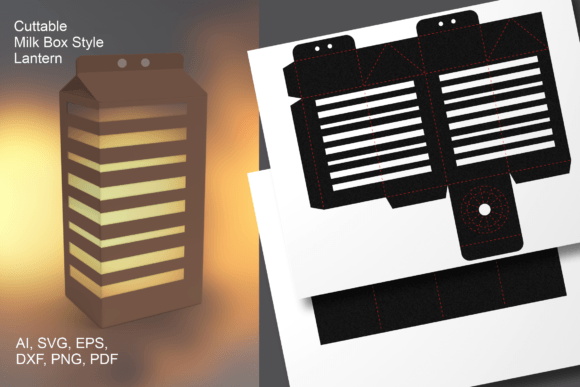
The visual personality of this template is distinctly nostalgic yet modern. The "milk box" silhouette evokes mid-century Americana and farmhouse charm, while the striped pattern offers a rhythmic visual texture that machines love to replicate. When I assess this for a machine embroidery design, the geometry is paramount. Unlike organic floral shapes where slight registration shifts can be hidden by overlapping petals, this lantern relies on crisp, straight lines and precise angles.
In a recent client consultation for a boutique bakery branding package, we needed a logo-adjacent icon for their staff aprons and retail tote bags. They wanted something that felt like a vintage milk delivery service but with a contemporary twist. The Striped Milk Box Style Lantern was the perfect candidate. However, moving from a 3D SVG intended for paper cutting to an embroidery file requires careful interpretation. The original file includes small holes on the top for hanging; in paper, these are functional. In embroidery, these become critical negative space elements. If you are creating an applique design based on this template, those holes must be reinforced with dense satin stitches or left as intentional cutouts within a larger patch to maintain structural integrity on fabric.
Real-World Application: The Custom Apron Test
To truly judge this asset, I mentally prototyped it for a heavy-duty canvas apron. Canvas is a textured fabric that can swallow fine details. The stripes on the milk box lantern are the defining feature here. For this project, I envisioned using a running stitch for the vertical stripes rather than a fill stitch. Why? Because a fill stitch on canvas can become bulletproof and stiff, ruining the drape of the apron. A running stitch maintains the vintage sketch aesthetic while keeping the garment comfortable.
For the lantern body itself, this template lends itself beautifully to a raw-edge applique technique. The boxy shape provides a stable foundation for the hoop size. If you are an Etsy seller listing personalized gifts, this style works exceptionally well for holiday embroidery. Imagine this lantern stitched in cream and red thread on a forest green sweatshirt. The contrast creates immediate buyer engagement because it feels specific and curated, not generic. The 3D nature of the original SVG helps us understand how light hits the planes of the box, allowing us to add subtle shading stitches to give the flat embroidery a sense of volume without increasing stitch density excessively.
Navigating Fabric Limitations and Hoop Constraints
While the Striped Milk Box Style Lantern is versatile, it demands respect regarding fabric choice. This is not a forgiving design for stretchy knits unless properly stabilized. The rigid vertical lines of the milk box will distort instantly on jersey fabric if the stabilizer is inadequate. During my testing phase for a baby embroidery project, I found that using two layers of medium-weight cut-away stabilizer was non-negotiable to keep the box looking square rather than trapezoidal.
You must also be cautious with small hoop sizes. While the lantern looks simple, the intersection points where the handle meets the box and where the stripes align with the edges require precision. If you scale this down for a cap or a pocket-sized embroidered patch, verify that the smallest stripe width remains above 1mm after scaling. Anything thinner risks thread breaks or tunneling. For caps specifically, the curved surface fights against the straight geometry of the milk box. I recommend testing the design on a curved cap frame before committing to a production run, as the distortion at the top curve might necessitate adjusting the aspect ratio of the digital embroidery file.
Commercial Viability for Makers and Sellers
For creative entrepreneurs and small shop owners, time is money. Does this template save digitizing time? Absolutely. Having a pre-made 3D SVG reference eliminates the guesswork of proportion. Instead of drawing a milk box from scratch and wondering if the perspective looks right, you have a validated geometric base. This accelerates the creation of commercial embroidery assets.
However, value lies in execution. Customers trust handmade products that look professional. A wobbly milk box lantern suggests amateur digitizing. To ensure brand consistency, use this template to create a series of coordinated items. The same lantern motif could appear as a large back print on a tote bag design and as a subtle wrist cuff detail on a matching sweatshirt. This cross-product recognition builds a cohesive collection that encourages higher cart values. Just remember to confirm licensing terms before selling finished items or distributing the digital embroidery file itself. Always respect the intellectual property of the original 3D SVG creator.
Essential Pre-Stitch Checklist for Designers
Before you load this design into your machine or list it in your shop, run through this practical checklist derived from my own studio workflow:
- Test on Scrap Fabric First: Never assume settings transfer perfectly between cotton, linen, and denim. The stripe spacing may need adjustment based on fabric texture.
- Check Thread Color Contrast: The striped pattern relies entirely on contrast. Test in black and white mockups to ensure the design reads clearly without color reliance.
- Review Stitch Density: Ensure the fill areas aren't too dense for the intended use. A table lantern decoration can handle density; a baby bib cannot.
- Inspect Small Details: Verify that the "small holes on the top" mentioned in the product description are digitized safely. On fabric, these should likely be eyelets or openwork rather than actual cuts to prevent fraying.
- Evaluate Stabilizer Needs: Match your backing to the fabric weight. Tear-away is rarely sufficient for this level of geometric precision.
- Confirm Licensing: Double-check whether your purchase allows for commercial embroidery sales or only personal use.
Final Thoughts on Design Integrity
The Striped Milk Box Style Lantern Template is a robust starting point for makers who appreciate structured, nostalgic aesthetics. It bridges the gap between digital crafting and traditional needlework effectively. Whether you are producing a custom apparel line, designing unique holiday gifts, or expanding your digital product catalog, this asset offers strong bones for development. Success, however, depends on your willingness to adapt the 3D SVG logic to the physical realities of thread and tension. Treat the template as a guide, not a rulebook, and always let the fabric dictate the final stitch strategy. When executed with care, this lantern becomes more than a template; it becomes a signature element of your handmade brand.