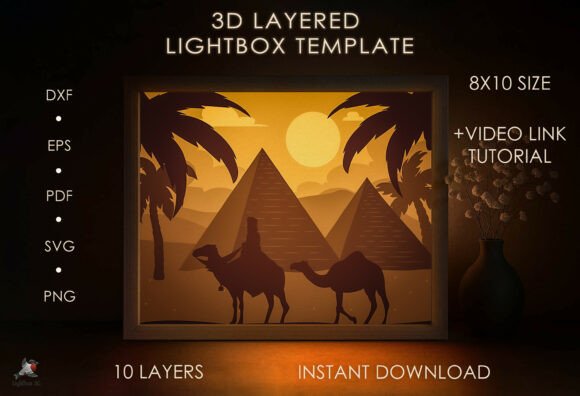
Egyptian Pyramids Shadow Box SVG: 3D Editorial Design
As a digital publisher and blog designer, I constantly evaluate graphic design assets not just for their aesthetic appeal, but for their functional utility in a real content marketing workflow. When I first opened the Egyptian Pyramids Shadow Box SVG, my immediate assessment was that this is more than a simple craft file; it is a sophisticated visual anchor for editorial design. The asset captures a specific mood that balances historical intrigue with modern craftsmanship. Unlike flat vector illustrations often found in stock libraries, this design leverages the concept of depth. It mimics the physical reality of layered paper art, creating an editorial atmosphere that feels tactile, premium, and intentionally curated.
This specific aesthetic naturally supports niches focused on travel blogging, history education, DIY culture, and artisanal crafts. For a publisher, the "shadow box" style implies a narrative of discovery. It suggests to the reader that the content within has layers, much like the artifact itself. In terms of visual communication, this asset avoids the cheap or clip-art appearance that can degrade reader trust. Instead, it offers a polished, artistic quality that signals high-value content. Whether you are running a lifestyle blog or an educational platform, this graphic design asset establishes a tone of wonder and meticulous detail right from the first pixel.
Strategic Applications Across Publishing Channels
In my daily workflow, versatility is non-negotiable. A single digital download must serve multiple purposes across a content ecosystem. This listing is for digital files to create your own 3D paper cut light box, but as a web designer, I see its application extending far beyond physical fabrication. The intricate layering inherent in this 3D SVG format translates exceptionally well to digital media where depth and texture are needed to break up flat layouts.
- Blog Featured Images: Use the rendered shadow box visualization as a hero image for articles about Egyptian history, paper crafting tutorials, or LED lighting guides. The built-in contrast draws the eye immediately.
- Pinterest Pin Graphics: Vertical pins require strong visual hooks. The silhouette nature of this design allows for easy text overlay without obscuring the main subject, making it ideal for high-performing Pinterest pins.
- Digital Guides and Lead Magnets: If you are creating a PDF guide on shadow box assembly or a travel itinerary, this asset serves as a professional cover element that elevates the perceived value of your freebie.
- Newsletter Headers: Email marketing often suffers from generic templates. Incorporating this stylized pyramid motif creates a consistent brand identity that subscribers recognize instantly in their inbox.
- Affiliate Marketing Visuals: For creators promoting Cricut machines, LED strips, or cardstock, this graphic acts as aspirational commercial design. It shows the potential end-result rather than just the product packaging.
By treating this 3D SVG as a core component of your creative design library, you ensure that your website header, social media graphics, and printable design materials all share a cohesive visual language. This consistency is crucial for small business branding and establishing authority in competitive niches.
Enhancing Visual Hierarchy and Reader Engagement
Content performance is heavily influenced by how quickly a user can process visual information. The Egyptian Pyramids Shadow Box SVG excels at reinforcing visual hierarchy. Because the design relies on light and shadow simulation, it naturally guides the viewer’s focus toward the center of the composition. In web design, this is invaluable for directing attention to headlines or call-to-action buttons placed adjacent to the graphic.
Furthermore, this asset supports better click-through potential by promising a unique experience. In a sea of standard photography and generic vectors, a stylized representation of a decorative night-light made of layered paper stands out. It triggers curiosity. For affiliate marketers and online educators, this distinction helps separate your content from competitors. The asset also improves category recognition; if used consistently for all "DIY" or "History" posts, readers begin to associate this specific visual style with that content pillar, streamlining navigation and improving user experience.
Optimal Placement vs. Contextual Caution
While this asset is powerful, strategic placement is key to maintaining editorial integrity. Based on my testing within various blog layouts, this design works best in spaces that allow it to breathe. Hero sections, wide-format article thumbnails, and dedicated landing pages for digital products are ideal environments. The complexity of the cut-paper layers needs sufficient negative space to be appreciated. It also performs beautifully as an editorial accent in sidebars or as a watermark-style background for quote cards.
However, publishers should exercise caution in specific scenarios. Avoid using this asset in small mobile thumbnails where the intricate details may blur into unrecognizable shapes. It is also less suitable for text-heavy blog images unless the opacity is significantly reduced, as the busy nature of the layers can compete with body copy. Additionally, while the Egyptian theme is versatile, it may feel out of place in strictly corporate, financial, or minimalist tech niches unless heavily abstracted. Always consider whether the whimsical, handcrafted mood aligns with the serious tone of your specific article before implementation.
Publisher Workflow Notes and Technical Best Practices
Before integrating this Egyptian Pyramids Shadow Box SVG into a live production site, I recommend a rigorous quality assurance checklist. As experienced designers know, a file that looks perfect in Illustrator or Canva may behave differently on the web.
- Cross-Device Testing: Preview the graphic on both desktop monitors and mobile screens. Ensure the shadow details remain distinct and do not disappear against dark mode backgrounds.
- Typography Pairing: Test the asset beside various font families. It pairs exceptionally well with elegant serif fonts for a museum-like feel, or clean sans-serif fonts for a modern tutorial look. Avoid overly decorative script fonts that might clash with the intricate line work.
- Contrast and Readability: If using the SVG as a background for text, apply a solid color overlay or gradient mask. The complex layers can make white text difficult to read without proper separation.
- File Optimization: SVGs can sometimes carry unnecessary metadata or hidden layers. Clean the code and compress the file to ensure fast load times, which is critical for SEO and user retention.
- Licensing Verification: Always confirm the commercial license terms. If you plan to use this on monetized websites, affiliate pages, or within paid digital downloads, ensure your usage rights are compliant. Respecting intellectual property protects your business reputation.
- Color Adaptation: Since this represents a light box, test how the colors render when converted to grayscale for printables or black-and-white email newsletters. The design should rely on value contrast, not just hue, to maintain its impact.
Ultimately, the Egyptian Pyramids Shadow Box SVG is a robust tool for the modern digital publisher. It bridges the gap between physical craft and digital storytelling, offering a unique way to enhance brand identity and engage audiences. By applying these editorial standards and technical checks, you transform a simple design asset into a cornerstone of a professional, high-performing content strategy.